





Blog
What can we help youfind today?

Discover our articles and videos
A Closer Look at Phonon
Two weeks after opening up Phonon, the story of the launch: why we built it, what it can do, the demos that came with it, and how it did on Hugging Face's Open TTS Leaderboard.

Gradium and Yampa partner on voice AI agents for customer experience
Gradium's voice models now run natively inside Yampa, the agentic platform enterprises use to build, deploy and supervise customer care agents, in SaaS on EU infrastructure or on-premise.

Gradium releases Phonon, an open-source text-to-speech model that runs on any device
Trained on NVIDIA GPUs, Phonon generates natural speech locally in as little as 64.5 MB, on phones, laptops, embedded hardware and in the browser.

Open-Sourcing Phonon: A Suite of Frontier On-Device TTS Models
Today, we're open-sourcing Phonon, now a family of 31m and 40m parameter text-to-speech (TTS) models that set a new standard for naturalness and accuracy on-device.
Gradium is now available on Eden AI
Eden AI is an AI gateway: one API for 500+ models across LLMs, speech, vision and translation, with routing, fallbacks and a dedicated EU endpoint for European data residency. Gradium's Text-to-Speech, Speech-to-Text and speech translation are now available through that API, pinned to the EU region.
1,000+ new voices, our most natural set yet
The Gradium voice catalog grows from ~380 to 1.4k voices. The 1,000+ new voices cover 28 accents across English, French, Spanish, German and Portuguese, cast for customer service, narration, ads and characters. Listen to 62 of them, and see how they were chosen.
Why we built the fastest robust TTS model
Our latest Text-to-Speech model takes under 50ms for the first audio chunk to arrive. Choosing a fast model does not have to come with cutting corners for model robustness: it improves naturalness and expressivity while retaining our strengths on hard cases like phone numbers and alphanumeric text.
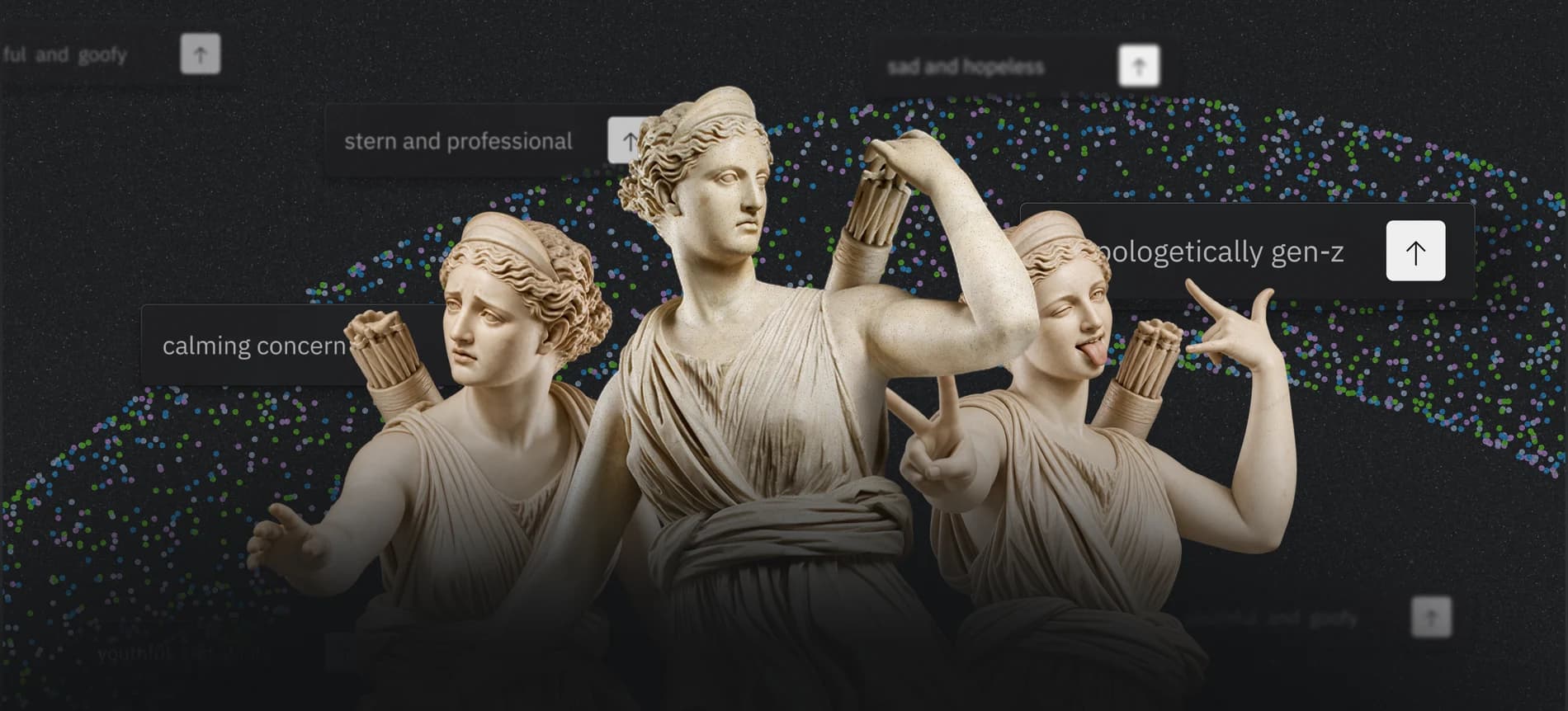
Giving voice agents a voice that adapts to context
Most voice agents speak with one preselected voice, whoever is on the line. Once a voice can be created from a text description, the voice becomes another property your code computes from context. This article builds the full pipeline: classify the message, map the signals to a Voice Design prompt, resolve it to an approved voice on the hot path, and design the missing ones in the background.

How a benchmark change produced a faster TTS model
On June 3, 2026, Gradium's time to first audio on the Coval TTS leaderboard moved from 171.9 ms to 429.6 ms. No model had shipped and no serving infrastructure had changed. What changed was the measurement: Coval had started counting the silence at the start of the stream.

Gradium now available for free on LiveKit Inference
Gradium Text-to-Speech is now available on LiveKit Inference, free until Oct. 9. Gradium TTS is designed for conversational use cases, with voice cloning, low latency (below 250ms TTFA), and robust pronunciation on difficult cases.