
Gradium: Solving voice
Today we’re excited to launch Gradium, the core engine powering the next generation of voice products and interactions. Drawing on more than a decade of frontier research, our mission is simple and ambitious: to provide the AI foundation that makes natural, real-time voice the default interface between people and machines. To achieve our ambition, we raised 70M$ in a seed round led by FirstMark Capital and Eurazeo with participation from DST Global Partners, Eric Schmidt, Xavier Niel, Rodolphe Saadé, Korelya Capital, Amplify Partners, Liquid2, Drysdale Ventures and angels including Yann LeCun, Olivier Pomel, Ilkka Paananen, Thomas Wolf, Guillermo Rauch and Mehdi Ghissassi.
An engine for natural voice agents
Voice is our most natural interface, yet its full potential with machines remains unrealized. Today’s voice AI is brittle, slow and expensive. Achieving human-like effortless interaction is not just difficult, it is a technological frontier. Solving it requires unmatched expertise and precision at every level to create voices that are fully organic, natural and convincingly human.
Gradium builds foundational audio language models: an audio-native family of models that unify generation, transcription, transformation and dialogue into a single neural architecture. Our models and platform are designed to deliver ultra-realistic, emotionally expressive speech with low latency, while remaining efficient and scalable so high-quality voice can be broadly affordable and widely available.
Our ambition is clear: become the technical backbone of global voice technology by eliminating the long-standing trade-offs between naturalness, speed, and cost; so that realistic, interactive voice experiences are no longer the exception but the default. Gradium launches with real-time, multilingual (English, French, German, Spanish, Portuguese) transcription and synthesis that can be used independently or together through flexible plans for developers and enterprises. We are already powering voice agents across health, customer support, and market research, NPCs in gaming and avatars in digital advertisement.
A team of inventors and builders

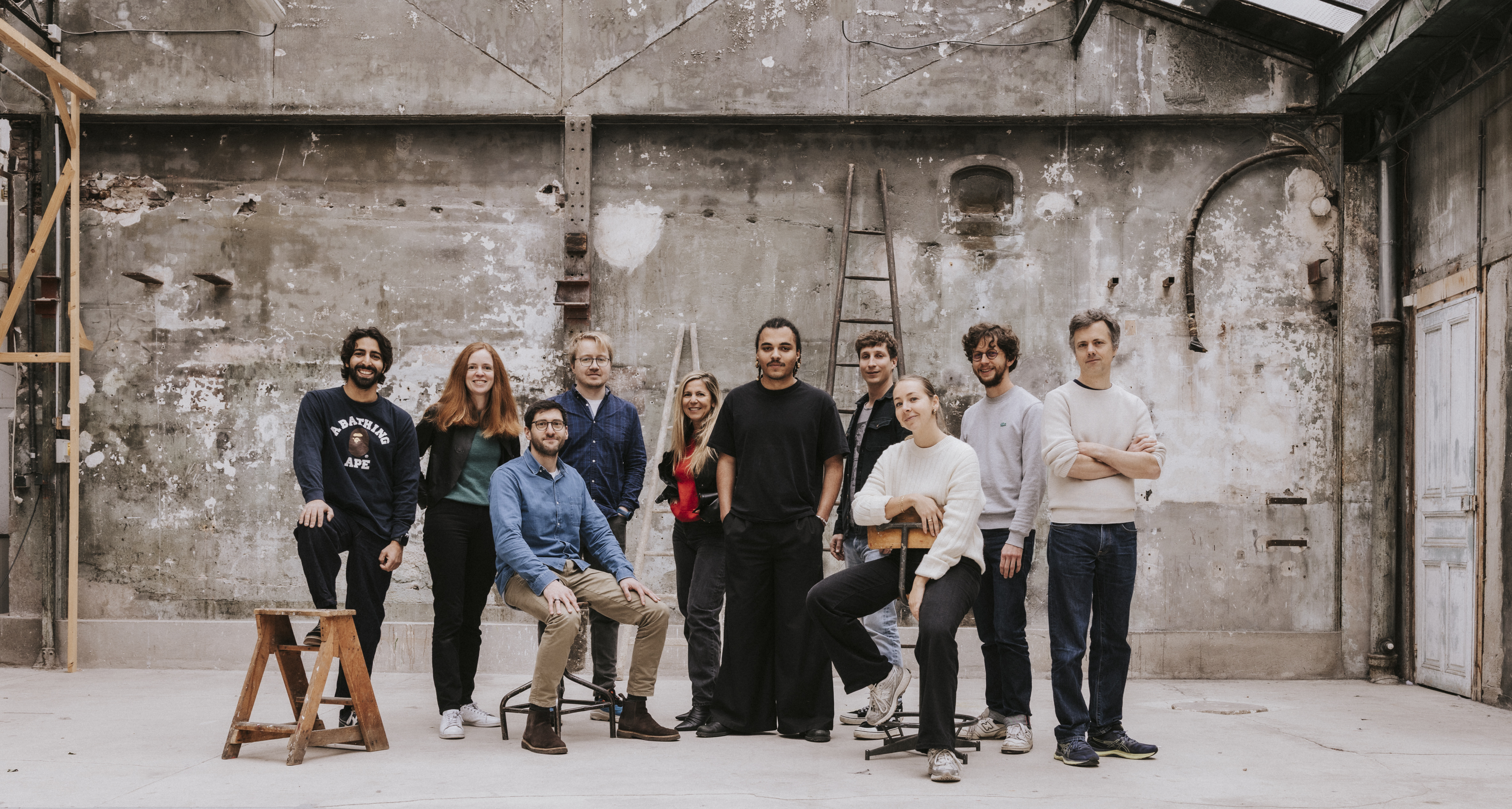
From left to right: Olivier Teboul (Chief Technology Officer), Alexandre Défossez (Chief Science Officer), Neil Zeghidour (Chief Executive Officer), Laurent Mazaré (Chief Coding Officer)
Gradium is founded by a team of pioneers in generative audio: Neil Zeghidour (Meta/Google DeepMind), Olivier Teboul (Google Brain), Laurent Mazaré (Google DeepMind/Jane Street) and Alexandre Défossez (Meta). Collectively they invented and open-sourced neural audio codecs and audio language models, and used this technology to power the very first voice cloning, text-to-music generation and speech-to-speech translation. They then created Kyutai, a non-profit lab pushing the frontiers of multimodal LLMs, in particular releasing the first real-time conversational model in 2024. The founding team is completed by Constance Grisoni (BCG X) joining as Chief Growth Officer, and Eugene Kharitonov (Meta/Google DeepMind) joining as Founding Scientist.
Gradium builds directly on more than a decade of frontier research, but is far from stepping away from fundamental research: the Gradium team keeps a natural proximity with Kyutai's researchers and engineers and Gradium’s ability to build on the latest foundational work in generative audio creates a fast, direct path for turning breakthrough research into production-grade products.
Where we are
After only three months since its inception, Gradium’s streaming transcription and synthesis APIs already serve customers in production: studios and game developers are using it for immersive characters; language platforms are integrating instant translation and natural voices; healthcare innovators are experimenting with conversational assistants that respect latency and privacy constraints. The platform supports developers and enterprises alike, from API access for rapid prototyping to enterprise deployments for production workloads.
Try it now — head to gradium.ai to explore the demos, try the APIs, and experience the voice technology firsthand. Create custom voices, run real-time transcription, or build end-to-end conversational demos.
Join the team — Gradium is hiring. If you care about the future of voice and want to build systems that make machines sound truly alive, check the careers page at gradium.ai and apply — we’re looking for researchers, engineers, and product folks who want to turn frontier audio research into real products.
Where we’re heading to
Voice will become the main interface between humans and machines. What it takes to get there is to break the technical limitations that make voice AI more brittle, less resilient and less natural than human voice. Gradium will bridge this gap.